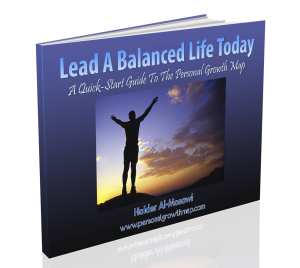
I’m very proud and excited to be sharing with you my latest creation (and first ebook!).
OK, it’s not a lengthy piece, but brevity is an advantage in my humble opinion. 😉
So What’s This Ebook About?
It’s about creating life balance in your life today, and not when you retire or become a millionaire.
The ebook looks at some common misconceptions about life balance and why it matters to your success.
It also gives the most comprehensive explanation of the Personal Growth Map to date, and how you can start using it to gain control over your life and accelerate your personal growth.
Why Should I Care?
Since you’re on a personal growth site I suspect you’re interested in personal growth (I’ve been told that I’m a genius, and this level of reasoning seems to prove it :P).
But personal growth isn’t always easy. In fact, it’s usually overwhelming. There’s just too much to read and do that you can feel scattered by all the topics you read about.
The Personal Growth Map helps to add structure to your life and identify the needs you must fulfill as a human being.
Trying to achieve success in one area of your life while neglecting all other areas will not only compromise your well-being but your chances of achieving success in that life area you’re focusing on.
This easy-to-read ebook explains why that’s the case and how you can begin to infuse your life with greater balance so you can make progress in every area of your life.
Where’s The Download Link, Dammit?!
There’s no download link, but there is a subscription form at the bottom of this post to subscribe to my “New Life” e-newsletter. Once you confirm your subscription you’ll automatically receive a link to download the ebook.
(If you’re reading this in an email or RSS reader you might need to click here to see the subscription form)
But I Already Receive Too Many Emails!
While I would love to offer the ebook on the site, I believe it serves as a great introduction to life balance, but there’s a lot more we need to cover to make life balance a reality in your life.
That’s why an email newsletter is a more suitable medium to offer you further information about how you can create balance in your life, and it also gives you a chance to email me any feedback, questions and suggestions.
I won’t be abusing your Inbox with lots of emails (usually one email a week), and you can always unsubscribe if you no longer wish to hear from me.
OK, I’m In! <– This is what you’re meant to be saying by now
That’s great!
Simply add your name and email address to the form below and make sure you click on the link in the confirmation email you receive.
(Can’t see a subscription form? Click here to go to the post and subscribe)
If you have any questions, please feel free to leave me a comment below, send me an email or get in touch via Twitter.